

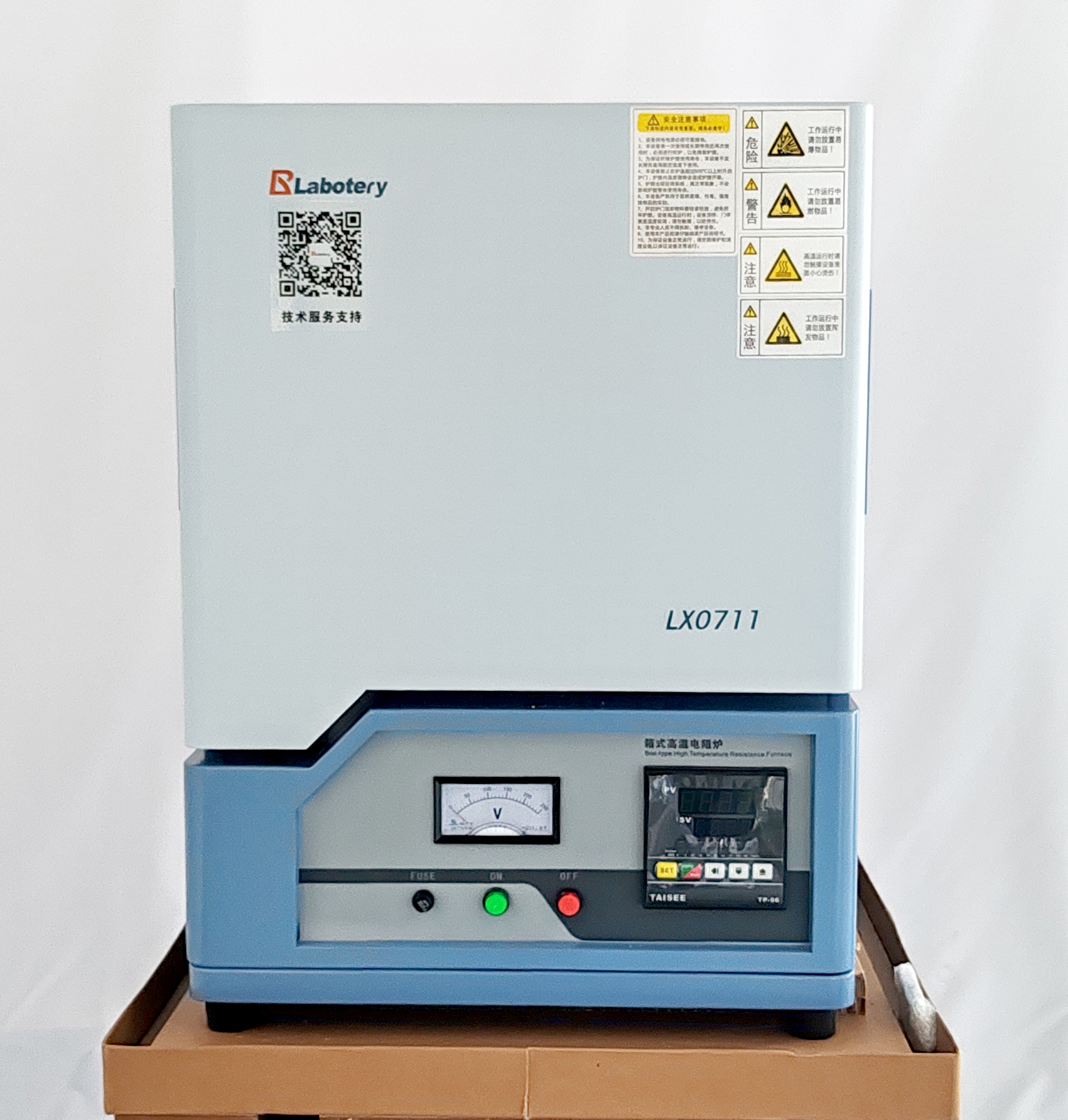
Q1: What are the main differences between the 1200°C and 1400°C series?
A: The core differences lie in the heating elements and maximum temperature. The 1200°C series uses alloy wire heating, optimal for 750-1000°C, suitable for general heat treatment. The 1400°C series employs silicon carbide rod heating, reaching higher temperatures with an optimal range of 1000-1300°C, ideal for ceramic sintering and high-temperature material testing.
Q2: What does the “A” suffix in the model number indicate?
A: Models with the “A” suffix (e.g., LX-0211A) feature an all-stainless-steel housing and are equipped with a 5-inch touchscreen programmable control system supporting multi-segment programming. Standard models have a basic control system.
Q3: How to choose the chamber capacity (from 2L to 36L)?
A: Choose based on the volume and size of samples processed per batch. For example, the LX-0211 (2L) suits small samples or powder experiments, while the LX-3611 (36L) can handle batch samples or larger workpieces. Always refer to the internal dimensions in the manual.
Q4: How to determine the power supply voltage (220V/380V)?
A: Lower-power models (≤4 kW) typically use 220V. Higher-power models (≥7.5 kw) usually require 380V three-phase power. You must verify your laboratory’s electrical configuration before selection. 380V models generally offer better heating efficiency and temperature uniformity.
Q5: Do standard models support programmable temperature control?
A: Yes. The standard configuration includes an imported 40-segment programmable temperature control system for setting complex heating and cooling curves. The “A” models add a touchscreen interface to this capability.
Product link:https://labotrend.com/Sample/176.html