

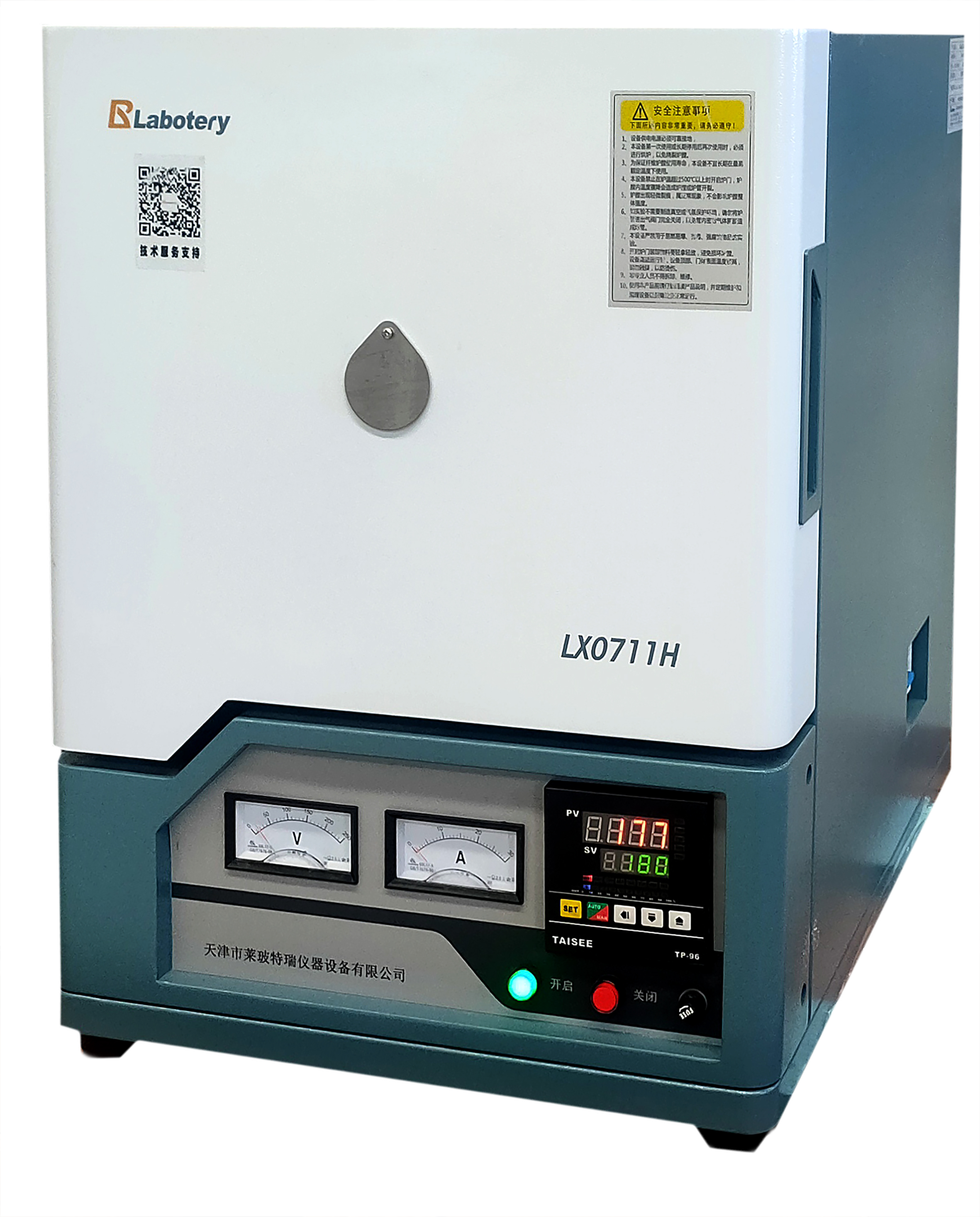
Q1: What is the difference between the 1200°C and 1400°C series?
A: Main differences: The 1200°C series uses alloy wire heating, suitable for general heat treatment (optimal 750-1000°C). The 1400°C series uses silicon carbide rod heating for higher temperature applications (optimal 1000-1300°C). The 1400°C series does not include a natural smoke exhaust device.
Q2: What does the "A" suffix in the model number indicate?
A: Models with "A" suffix (e.g., LX-0211A) feature full stainless steel construction and a 5-inch touchscreen programmable control system (multi-segment programming). Standard models use a basic control system.
Q3: What is the heating rate?
A: All models reach maximum temperature from room temperature in ≤20 minutes. Actual heating time depends on ambient temperature, load, and power supply voltage.
Q4: What safety features are included?
A: Multiple protections:
Auto power-off when door opens
Independent over-temperature protection
Leakage protection
Double-shell insulation design
Lateral sliding door (prevents accidental opening)
Q5: What is the natural smoke exhaust device? When is it needed?
A: Optional for the 1200°C series, it exhausts smoke generated during sample heating. Recommended for organic ashing, sample sintering, or other smoke-producing experiments. Not available for the 1400°C series due to different high-temperature fume handling requirements.
Q6: How to choose power supply voltage (220V or 380V)?
A: Lower power models (≤4kW) typically use 220V; higher power models (≥7.5kW) require 380V. Check your lab's electrical configuration. 380V models offer faster heating and more stable temperature uniformity.
Q7: What control system functions are available?
A: Intelligent control system includes:
Fuzzy logic & self-tuning PID control
Parameter memory function
Programmable temperature control (imported 40-segment system) in standard models
A models add 5-inch touchscreen operation
Q8: Are there sample placement restrictions?
A: Recommendations:
Sample volume ≤ 2/3 of chamber capacity
Ensure airflow; do not block rear exhaust ports
Use crucibles or heat-resistant trays
Corrosive or volatile samples require sealed containers
Q9: What about energy consumption and efficiency?
A: High-quality polycrystalline mullite chamber provides excellent insulation, offering over 60% energy savings compared to traditional furnaces. Low standby power consumption; power automatically adjusts to maintain set temperature.
Q10: What are the installation and environment requirements
A: Key requirements:
Ambient temperature: 5-25°C (performance tested at 20°C/50%RH)
Ventilation: ≥30cm clearance behind furnace
Bench: Stable, heat-resistant surface
Avoid damp or flammable environments
Initial use: Run empty to burn off manufacturing residues
https://labotrend.com/Sample/176.html